Unrecaptured Section 1250 Gain Explained
By Hans Goldstein, EA, founder, Retirement Literacy Foundation · Updated
Admitted to practice before the IRS.
Unrecaptured section 1250 gain tax rate, in short
The unrecaptured section 1250 gain tax rate is your ordinary income rate, capped at 25%. This gain is the portion of your profit on a sold rental or commercial building that equals the straight-line depreciation you took or could have taken. If your bracket is under 25%, the lower rate applies. The rest of the profit gets regular long-term capital gains rates, and equipment depreciation is handled separately as ordinary income.
What is section 1250 property?
Section 1250 property is the building itself, such as a rental or commercial structure, whose straight-line depreciation reduces your basis. Depreciation on equipment, appliances and cost segregation components is different. That is section 1245 property, and its depreciation is recaptured as ordinary income on a sale, up to the amount taken.
How is 1250 gain figured if I never claimed depreciation?
Depreciation lowers your basis whether or not you claimed it, a rule often described as allowed or allowable. Skipping the deduction therefore does not avoid the tax. In the example on the page, $160,000 of straight-line depreciation on a building sold at a $560,000 gain became unrecaptured section 1250 gain, taxed at up to 25%.
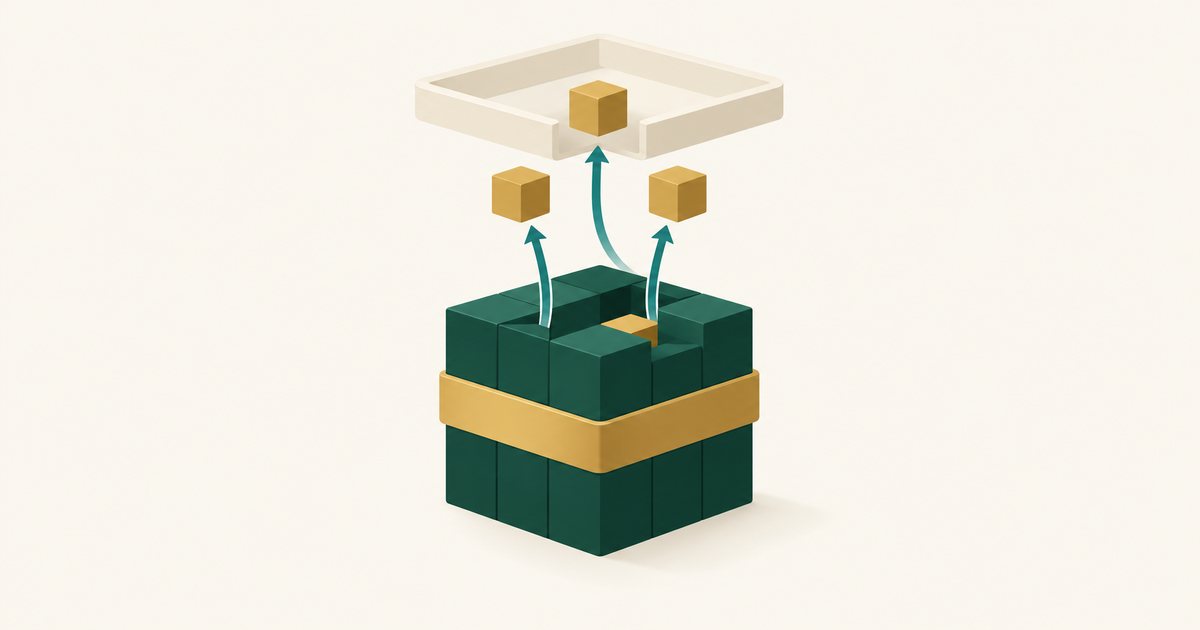
How a sale is split
- Section 1245 recapture (equipment, appliances, and cost segregation components): ordinary income, up to the depreciation taken.
- Unrecaptured section 1250 gain (the building's straight-line depreciation): taxed at up to 25%.
- The rest of the gain: 0%, 15% or 20% long-term capital gains rates, plus the 3.8% net investment income tax where it applies, plus state tax.
Depreciation reduces your basis whether or not you claimed it ("allowed or allowable"), so skipping depreciation does not avoid this tax.
Example
A rental bought for $600,000 (building $450,000) sells for $1,000,000 after $160,000 of straight-line depreciation. Adjusted basis is $440,000, so the gain is $560,000: $160,000 is unrecaptured section 1250 gain taxed at up to 25%, and $400,000 is regular long-term gain. Try your own numbers in the depreciation recapture calculator.
Get the free Social Security guide.
If "Unrecaptured Section 1250 Gain Explained" was useful, the same plain-English treatment of Social Security is yours free. It covers the taxable-benefit thresholds, the survivor-benefit trap and the claiming-age math. We'll also let you know when the next free class is. Nothing to buy.
The Retirement Literacy Foundation is a 501(c)(3) public charity (EIN 41-5062266). This is free public education. We don't sell financial products and we don't give individualized advice. We'll email it to you. Unsubscribe any time.
Installment sales and recapture
- Section 1245 recapture is taxed in the year of sale in full, even if you receive payments over many years (IRC 453(i)).
- Unrecaptured section 1250 gain is reported first as payments come in, before the lower-rate gain (Treas. Reg. 1.453-12).
- So a heavy cost segregation study can leave a large ordinary-income bill in year one of an installment sale. See Form 6252 installment reporting.
Ways the tax is deferred or reduced
- A 1031 exchange defers it (the depreciation carries over to the replacement).
- Holding until death: heirs get a step-up in basis, which erases the recapture.
- Released suspended passive losses can offset it.
- Spreading the 1250 gain across low-income years with an installment sale can keep it under 25%.
Common questions
What is the tax rate on unrecaptured section 1250 gain?
Your ordinary income tax rate, capped at 25%. If your bracket is lower than 25%, the lower rate applies.
Is depreciation recapture taxed in an installment sale?
Section 1245 recapture is taxed in the year of sale in full. Unrecaptured section 1250 gain is reported as payments are received, ahead of the lower-rate gain.
Does bonus depreciation get recaptured?
Yes. Bonus depreciation and cost segregation on 1245 property are recaptured as ordinary income on a sale, not at the 25% rate.
Related
- Depreciation recapture calculator
- Form 6252 installment sale
- Selling commercial property
- Suspended passive losses
- Free Big Sale Tax Worksheet
More for sellers: Suspended Passive Losses When You Sell a Rental Property · Capital Loss Carryover · Real Estate Professional Status Explained · Converting a Rental to a Primary Residence, or a Home to a Rental · QSBS
Sources: IRS Topic 409; IRS Publication 544; IRC 1(h)(1)(E) and 1(h)(6); Treas. Reg. 1.453-12. Checked October 10, 2026.
Education only; nothing is sold here. The Retirement Literacy Foundation is a 501(c)(3) nonprofit. Tax rules depend on your facts; check with a CPA or tax attorney before you sell.
Want to run these numbers for your own situation?
The Retirement Literacy Foundation runs free retirement classes on Social Security timing, taxes in retirement, and how to turn savings into income. No products are sold at our classes.

Hans Goldstein, EA
Founder & Executive Director · Retirement Literacy Foundation, a 501(c)(3) non-profit
Admitted to practice before the IRS
Want more information on this? Put your name below and I'll send it over in plain English, at no cost. If your situation has a wrinkle, reply to the email and tell me what it is; I read them.
You're reading: Unrecaptured Section 1250 Gain Explained
Free education. The Foundation sells nothing. By submitting you agree to receive free educational emails. We never sell or share your information and you can unsubscribe from any email.